The Inflammation You Can’t Feel — and the Simple Blood Test That Reveals It
A swollen ankle announces itself. The low-grade inflammation linked to heart disease, diabetes and ageing does not. One inexpensive blood test can show it, and the habits that lower it are well known. Here is where berberine fits.
You know inflammation when you see it: the redness around a cut, the swelling after a sprain. That kind is useful. It arrives, does its job and leaves.
There is another kind that never announces itself. It simmers at a low level for years, with no pain and no swelling, and researchers now link it to many of the chronic conditions of modern life — from heart disease and type 2 diabetes to the way we age.
You cannot feel it. But you can measure it.
The test: hs-CRP
C-reactive protein (CRP) is made by the liver in response to inflammation. The high-sensitivity version of the test, hs-CRP, can detect the low levels associated with chronic inflammation rather than only the high levels seen in acute infection.
In 2003, the American Heart Association and the US Centers for Disease Control and Prevention published guidance on using hs-CRP to gauge cardiovascular risk. Their bands are still widely used:
- Below 1 mg/L — lower risk.
- 1 to 3 mg/L — average risk.
- Above 3 mg/L — higher risk.
You cannot feel it. But you can measure it.
Reading the result sensibly
A single hs-CRP result can be thrown off by a cold, a recent injury or a hard workout, so it is best measured when you are well and repeated before drawing conclusions. Very high values usually point to an infection or another acute problem, not chronic inflammation, and need a doctor’s attention.
Most usefully, hs-CRP is a trend you can track: test, change your habits for a few months, and test again.
Where it comes from
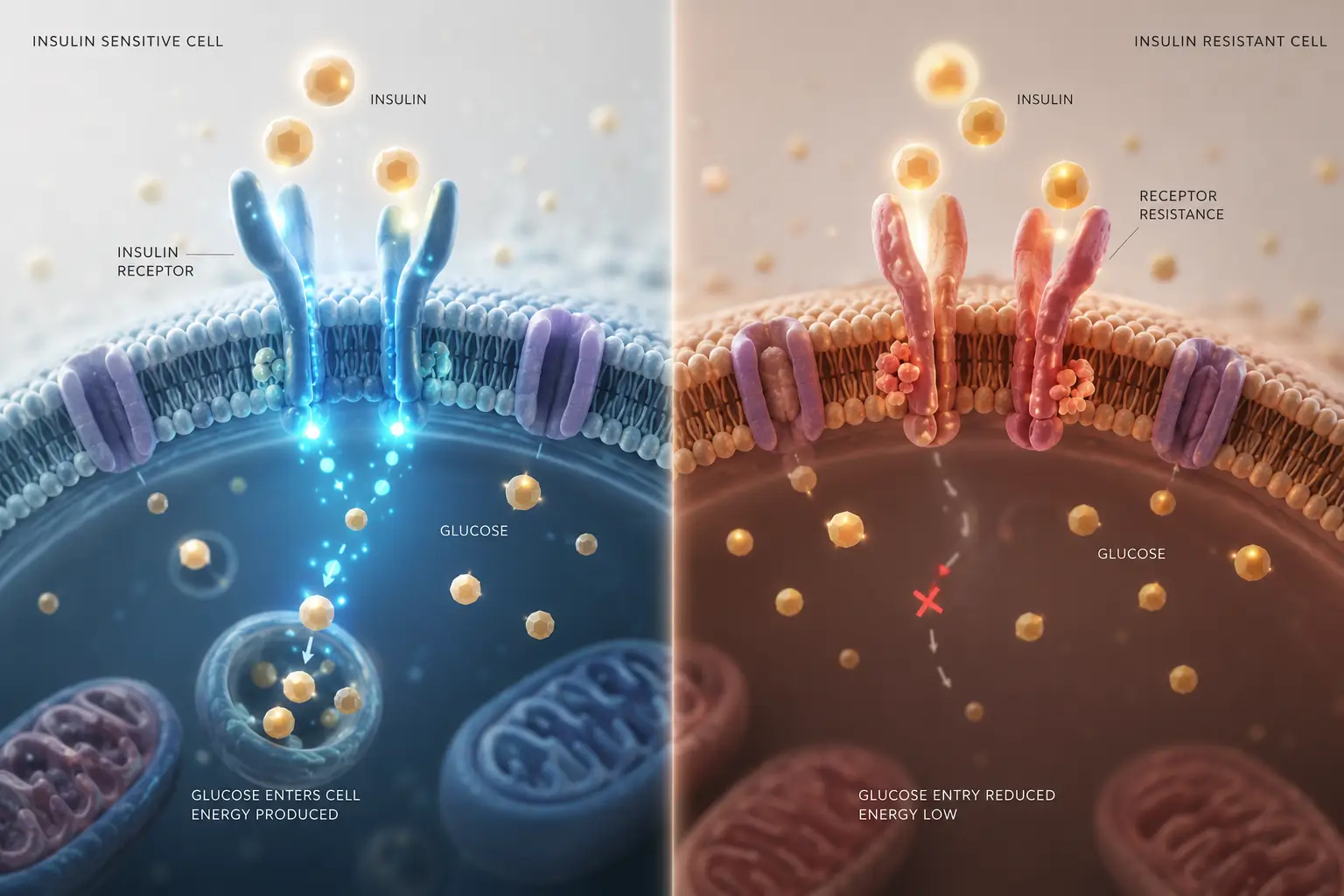
One of the biggest sources is fat stored around the organs. Visceral fat is not inert storage; it releases inflammatory signals into the bloodstream. A landmark 2006 review in Nature described how those signals interfere with insulin, linking inflammation and insulin resistance into one loop — each making the other worse.
Other drivers include poor sleep, smoking, a diet heavy in refined and ultra-processed food, inactivity and a leaky gut barrier. With age, low-grade inflammation tends to rise — a pattern researchers have named “inflammaging”.
What lowers it
The most effective levers are the everyday ones:
- Losing weight around the waist, which shrinks the most inflammatory fat.
- Regular movement, including strength training.
- A diet built on vegetables, dals, whole grains, nuts, fish and olive or mustard oil.
- Seven or more hours of sleep, and not smoking.
Where berberine fits
Berberine’s link to inflammation is mostly indirect, and that is worth being clear about. Its best-established effects are better blood sugar, better insulin sensitivity and lower triglycerides — and because inflammation and insulin resistance feed each other, improving one tends to help the other.
Laboratory research also shows direct anti-inflammatory activity, and some clinical studies have reported lower inflammatory markers alongside metabolic improvements. Part of the effect may run through the gut, where berberine shifts bacteria in ways associated with a stronger gut barrier. The human evidence is less extensive than for blood sugar, so treat inflammation as a possible added benefit rather than the main reason to take it.
Adding anything for inflammation? Start with a clean product
It would defeat the purpose to take a supplement for inflammation that carries its own load of contaminants. Berberine is extracted from a farmed root, and a poorly tested extract can bring pesticide residues or heavy metals with it.
The only way to know is a lab report for the batch. Here is what to check before buying any berberine.
A simple 12-week experiment
Ask your doctor for an hs-CRP alongside your usual blood work while you are well. For the next 12 weeks, work on the everyday levers above — waist, movement, food and sleep — and, if you and your doctor agree it suits you, take berberine with meals (commonly 500 mg with breakfast and dinner). Then repeat the test.
The bottom line
Silent inflammation is common, measurable and responsive to change. Your waistline, movement, diet and sleep matter most. Berberine’s strongest evidence is metabolic, and its effect on inflammation is likely a knock-on benefit of that — a reasonable addition, as long as the product itself is clean.
Reader questions
How do I know if I have chronic inflammation?
Ask your doctor about an hs-CRP test, taken when you are well. Values between 1 and 3 mg/L are average, and above 3 mg/L are associated with higher cardiovascular risk.
Is berberine anti-inflammatory?
Laboratory studies show anti-inflammatory activity, and some clinical studies report lower inflammatory markers. Its main, best-proven effects are metabolic, which also tend to reduce inflammation.
Sources
- Pearson TA et al. — Markers of inflammation and cardiovascular disease: application to clinical and public health practice (AHA/CDC scientific statement). Circulation, 2003.
- Hotamisligil GS — Inflammation and metabolic disorders. Nature, 2006.
- Franceschi C, Campisi J — Chronic inflammation (inflammaging) and its potential contribution to age-associated diseases. Journals of Gerontology: Series A, 2014.
- Habtemariam S — Berberine pharmacology and the gut microbiota: a hidden therapeutic link. Pharmacological Research, 2020.
More from the Journal
Most of Your Berberine Never Leaves Your Gut. Scientists Think That’s the Point

Longevity Researchers Keep Circling the Same Cellular Switch. Here’s Why It Matters at 35, Not 75