The Blood Test Most People Are Never Offered — and Why It Can Flag Trouble Years Before Your Sugar Rises
Fasting glucose can look normal for years while your body works overtime to keep it there. A second number — fasting insulin — shows the strain much earlier. How to ask for it, how to read it, and what the research says about turning it around.
Here is a scenario doctors see all the time. Every annual check-up, your fasting glucose comes back “normal” — 92, then 95, then 98. Then one year it reads 112, and suddenly you are prediabetic.
It feels sudden. It almost never is. For most of those “normal” years, your pancreas was producing more and more insulin to keep that glucose number in range. The strain was there all along; the standard test simply was not designed to see it.
The problem has a name — insulin resistance — and it can be picked up much earlier with a test that costs little and is rarely offered unless you ask.
What insulin resistance actually is
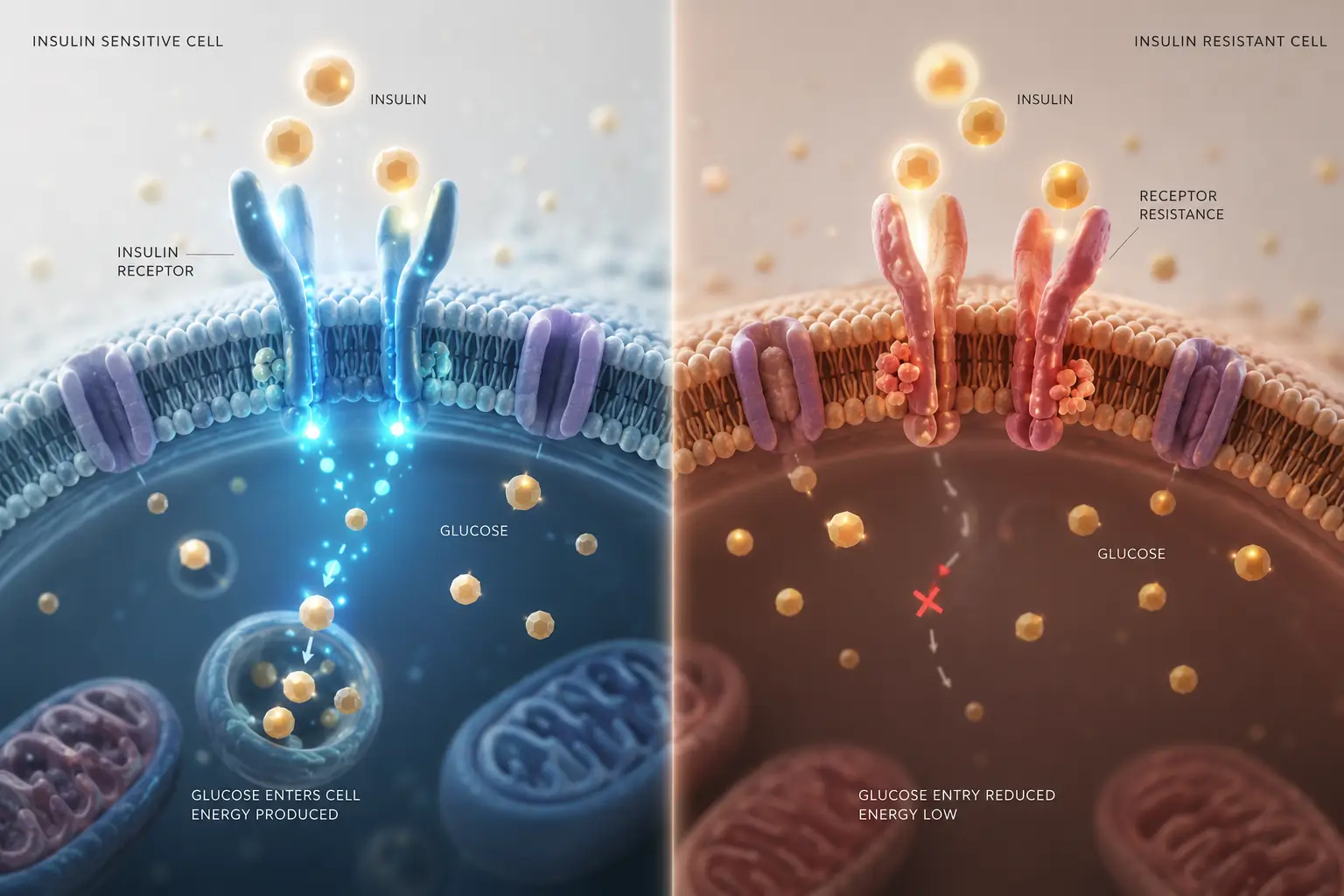
Insulin is the key that lets glucose into your muscle, liver and fat cells. In insulin resistance, those cells respond less and less to the key. To compensate, the pancreas produces more insulin, and for years that extra insulin keeps blood sugar looking normal.
That compensation is not harmless. Persistently high insulin encourages fat storage, particularly around the organs, and is linked to raised triglycerides, high blood pressure, fatty liver and, in women, polycystic ovary syndrome. Eventually the pancreas cannot keep up, and blood sugar starts to climb.
The years before that climb are the most important window for action — and the window most often missed.
The strain was there all along; the standard test simply was not designed to see it.
The number that sees it first
If fasting glucose shows the result, fasting insulin shows the effort. Measured together in the same morning blood draw, the two let your doctor calculate HOMA-IR, a widely used estimate of insulin resistance first described in the journal Diabetologia in 1985.
The formula is simple: fasting insulin (in µU/mL) multiplied by fasting glucose (in mg/dL), divided by 405. There is no single universal cut-off — thresholds used in research range from roughly 2 to 2.9 depending on the population — so ask your doctor how to read your result. What matters most is the trend over time.
- Fast for 8–12 hours beforehand; water is fine.
- Ask for fasting insulin and fasting glucose from the same sample.
- Keep a copy of the result, and repeat it after three months of changes.
Three modern habits that drive it
Diet is the first. Highly refined, quickly digested foods produce repeated sharp rises in blood sugar and insulin. Over years, that pattern is one of the most reliable ways to wear down insulin sensitivity.
Sitting is the second. Your muscles are the body’s biggest destination for glucose after a meal, and they absorb it far better when they are used. Long, unbroken hours of sitting blunt that effect; even short walks after meals measurably improve it.
The third is low-grade inflammation and poor sleep. Inflammatory signals from excess abdominal fat interfere directly with insulin signalling, a link set out in a landmark 2006 review in Nature, and short sleep worsens insulin sensitivity within days.
What turns it around
Insulin resistance is highly responsive to change, especially early on. The Diabetes Prevention Program showed that a structured lifestyle programme — regular activity and a modest weight loss of around 7% — cut the risk of progressing to diabetes by 58%.
The most effective levers are the ones that make muscles hungry for glucose and give the pancreas a break: regular movement (particularly strength training and walking after meals), fewer refined carbohydrates, a smaller waistline and consistent sleep.
Where berberine fits
Berberine works on several of the same pathways. By switching on AMPK, the cell’s energy sensor, it helps muscles take up glucose partly independently of insulin, reduces the liver’s glucose output, and slows new fat production. A 2010 study in Metabolism found it also increases the number of insulin receptors on cells.
In clinical trials, that has translated into lower fasting glucose, HbA1c and triglycerides, and several trials report lower fasting insulin and HOMA-IR. It is not a substitute for the habits above; it is a well-studied supplement that supports them.
The trials used real berberine. Make sure yours is
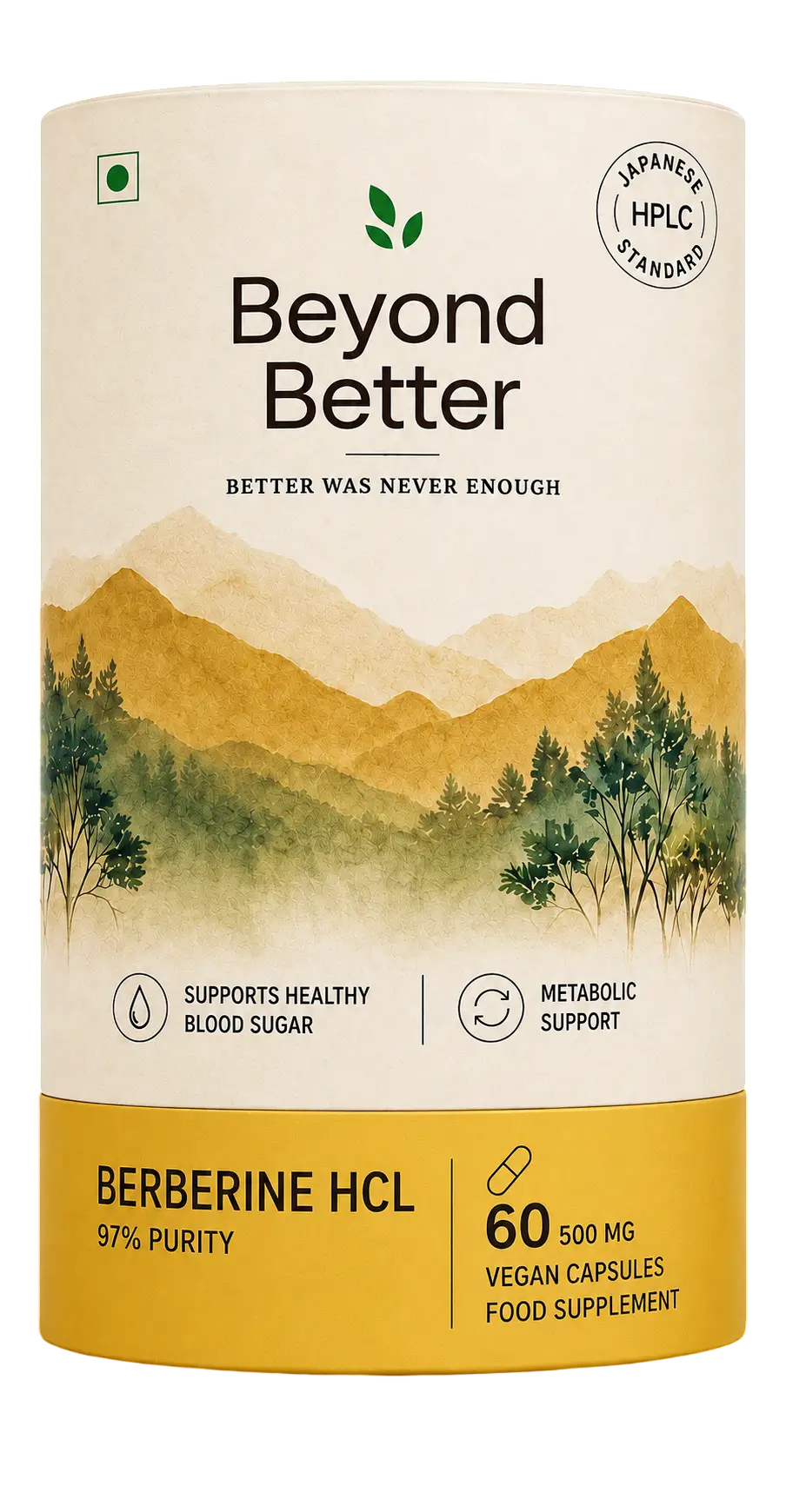
Every result above depends on a defined dose of berberine hydrochloride. Supplement labels are not held to the same standard as the trials: a capsule can list the weight of an extract rather than the berberine it contains, and a plant extract can carry pesticide residues or heavy metals from the field.
If you are going to measure your fasting insulin before and after, it makes sense to know exactly what you took in between. Here is how to check any product.
A 12-week plan you can measure
Test your fasting insulin, fasting glucose and HbA1c. For the next 12 weeks, walk after your two largest meals, strength-train twice a week, move refined carbohydrates to the end of the plate and protect your sleep. If you and your doctor agree berberine is appropriate, take 500 mg with breakfast and dinner.
Then repeat the same tests. A falling HOMA-IR is one of the clearest signs that your metabolism is moving in the right direction.
The bottom line
Insulin resistance is silent, common and — caught early — very reversible. The first step is simply to measure it. The second is the everyday habits with the strongest evidence. Berberine, from a source you can verify, can support that work.
Reader questions
Can insulin resistance be reversed?
In its earlier stages, often substantially — mainly through regular movement, a smaller waistline, better food choices and sleep. Berberine can support that process.
How do I know if I have insulin resistance?
Ask your doctor for fasting insulin and fasting glucose from the same sample, which gives HOMA-IR. Fasting glucose alone often misses it early.
Is HOMA-IR a diagnosis?
No. It is an estimate, and the thresholds vary between populations. It is most useful for tracking your own trend over time, interpreted with your doctor.
Sources
- Matthews DR et al. — Homeostasis model assessment: insulin resistance and β-cell function from fasting plasma glucose and insulin concentrations in man. Diabetologia, 1985.
- DeFronzo RA — Insulin resistance, lipotoxicity, type 2 diabetes and atherosclerosis: the missing links. Diabetologia, 2010.
- Hotamisligil GS — Inflammation and metabolic disorders. Nature, 2006.
- Knowler WC et al. — Reduction in the incidence of type 2 diabetes with lifestyle intervention or metformin. New England Journal of Medicine, 2002.
- Zhang H et al. — Berberine lowers blood glucose in type 2 diabetes mellitus patients through increasing insulin receptor expression. Metabolism, 2010.
- Yin J et al. — Efficacy of berberine in patients with type 2 diabetes mellitus. Metabolism, 2008.
More from the Journal
Your Sugar Is ‘Borderline’. Here’s What the Research Says About the Years Before a Diagnosis
Eating Less but the Weight Won’t Move? Researchers Point to a Hormone Most Diets Ignore