That 3 p.m. Brain Fog Might Not Be About Sleep. Researchers Are Looking at Your Blood Sugar
Your brain burns about a fifth of your body’s energy and has almost no fuel reserves. When supply swings, so does focus. What the science says about glucose, insulin and the mind — and what it does not yet say about berberine.

Lunch was a big one. By three in the afternoon you have read the same email four times, your head feels heavy, and the only thing that seems to help is a sweet chai and something to go with it.
Most people blame the post-lunch slump on sleep or on the heat. Both can play a part. But researchers studying metabolism and the brain have been pointing at another suspect for years: the rise and fall of blood sugar after a meal.
The hungriest organ you own
Your brain makes up about 2% of your body weight but uses roughly 20% of its energy at rest, a figure set out in a widely cited 2002 paper in PNAS. Unlike muscle or fat, it stores almost no fuel of its own. It depends on a steady, minute-by-minute supply of glucose from the blood.
That makes the brain unusually sensitive to swings. When blood sugar spikes after a heavy, refined meal and then drops a couple of hours later, many people notice the drop as sluggish thinking, irritability and a sudden craving for sugar.
It stores almost no fuel of its own.
What glucose monitors have revealed
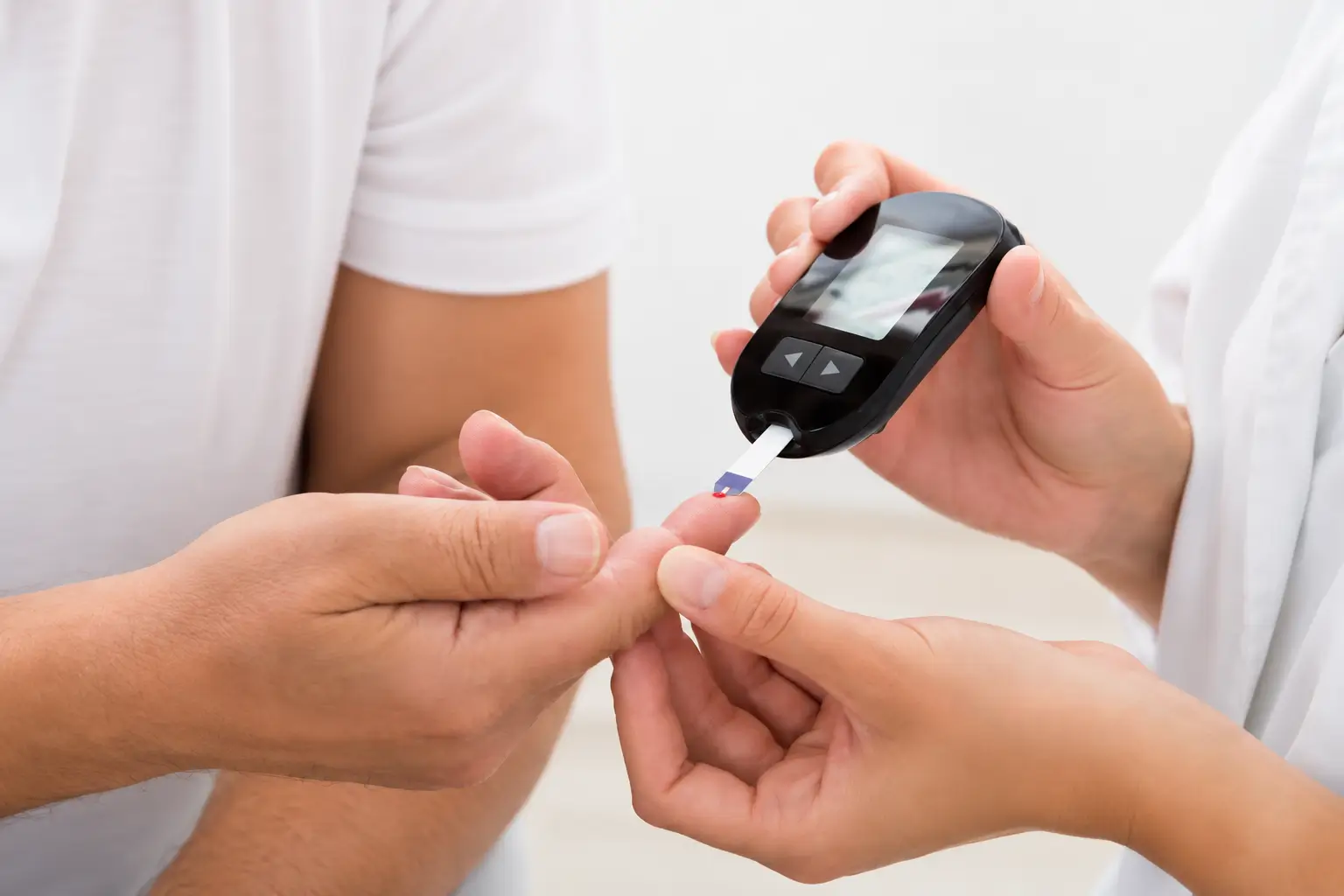
Continuous glucose monitors — small sensors worn on the upper arm — have let ordinary people watch their blood sugar in real time. One of the most common discoveries is how much the same meal can vary: the same plate of rice produces a gentle curve one day and a steep spike and crash the next, depending on sleep, stress, activity and what was eaten first.
Many users report that their afternoon slumps line up with the crash after a spike. That is not yet a proven clinical rule, but it is consistent with what we know about the brain’s dependence on a steady fuel supply.
Insulin works in the brain, too
Insulin is not only a blood-sugar hormone. Insulin receptors are found throughout the brain, including regions involved in memory and learning, where insulin signalling helps connections between nerve cells adapt and strengthen.
When insulin resistance develops in the body, researchers believe the brain can be affected too. Some scientists have gone as far as describing Alzheimer’s disease as “type 3 diabetes”, a theory set out in a 2014 review in European Neuropsychopharmacology. It remains a hypothesis, but it has made metabolic health a serious topic in brain research.
Where berberine comes in — and the limits of what we know
Berberine has been studied for the brain mainly in laboratory and animal work. A 2010 review in Phytotherapy Research summarised evidence that berberine can reach the brain and influence energy signalling and inflammation there, and animal models of diabetes-related cognitive decline have shown benefit.
Human trials of berberine specifically for memory or focus are still limited, and it would be wrong to promise sharper thinking from a capsule. The more realistic link is indirect: berberine has good human evidence for steadier blood sugar and better insulin sensitivity, and a steadier fuel supply is what the brain appears to prefer.
What helps the afternoon slump now
These habits smooth the post-meal curve, and most people notice the difference within days:
- Eat vegetables and protein before the rice, roti or bread at lunch.
- Take a 10-minute walk after your largest meal.
- Swap the sweet afternoon snack for protein or nuts, which do not trigger the same spike.
- Guard your sleep: short nights make blood-sugar swings noticeably worse the next day.
If you are taking berberine for your metabolism, take a good one
Nobody should buy berberine as a brain supplement on today’s evidence. But if you and your doctor decide it makes sense for your blood sugar or insulin sensitivity, a steadier afternoon may be one of the side benefits you notice.
Either way, the product matters. Berberine is extracted from a farmed root, labels are not proof, and contamination is invisible. Here is how to tell a tested product from a claimed one.
How it is usually taken
In the metabolic trials, berberine was taken with meals — commonly 500 mg with breakfast and 500 mg with dinner. Taking it with lunch instead of breakfast is reasonable if lunch is your biggest meal, since its effect lines up with the rise in blood sugar after eating.
The bottom line
Your brain runs on a steady supply of glucose, and big swings in blood sugar are a plausible cause of the afternoon fog. The habits that smooth those swings have the strongest support. Berberine’s role in the brain is still being researched; its role in blood sugar is much better established — and that is the honest reason to consider it.
Reader questions
Does berberine improve focus?
There is not yet good human evidence that it does directly. Its better-established effect is on blood sugar and insulin sensitivity, which may indirectly support steadier energy.
Why do I feel sleepy after lunch?
Several things contribute, including your body clock and the size of the meal. A big blood-sugar rise and fall after a refined meal is a common and fixable factor.
Sources
- Raichle ME, Gusnard DA — Appraising the brain’s energy budget. Proceedings of the National Academy of Sciences, 2002.
- de la Monte SM — Type 3 diabetes is sporadic Alzheimer’s disease: mini-review. European Neuropsychopharmacology, 2014.
- Kulkarni SK, Dhir A — Berberine: a plant alkaloid with therapeutic potential for central nervous system disorders. Phytotherapy Research, 2010.
- Zhang Y et al. — Treatment of type 2 diabetes and dyslipidemia with the natural plant alkaloid berberine. Journal of Clinical Endocrinology & Metabolism, 2008.
More from the Journal
Your Sugar Is ‘Borderline’. Here’s What the Research Says About the Years Before a Diagnosis

Six Short Nights: The Sleep Study That Showed How Fast Your Metabolism Can Slip