Fatty Liver Now Affects One in Four Adults Worldwide. Most Have No Idea They Have It
It causes no pain, often shows up by accident on an ultrasound, and is closely tied to blood sugar and belly fat. What fatty liver is, how it is found, what reverses it — and what a berberine trial measured.
It often turns up by accident. You go for an abdominal ultrasound for something else, and the report mentions “grade 1 fatty liver”. Nobody seems worried. You do not drink much. Nothing hurts.
That shrug is part of the problem. Fatty liver is one of the most common metabolic conditions in the world, closely linked to blood sugar, triglycerides and belly fat — and at its early stages, it is also one of the most reversible.
A new name for a common condition
For years it was called non-alcoholic fatty liver disease, or NAFLD. In 2023, international liver societies agreed a new name — metabolic dysfunction-associated steatotic liver disease, or MASLD — to reflect what actually drives it: the same metabolic problems behind prediabetes and type 2 diabetes, rather than simply the absence of alcohol.
A 2016 analysis in the journal Hepatology estimated that about a quarter of adults worldwide have it. Most do not know, because early fatty liver rarely causes symptoms.
At its early stages, it is also one of the most reversible.
Why the liver matters so much for metabolism
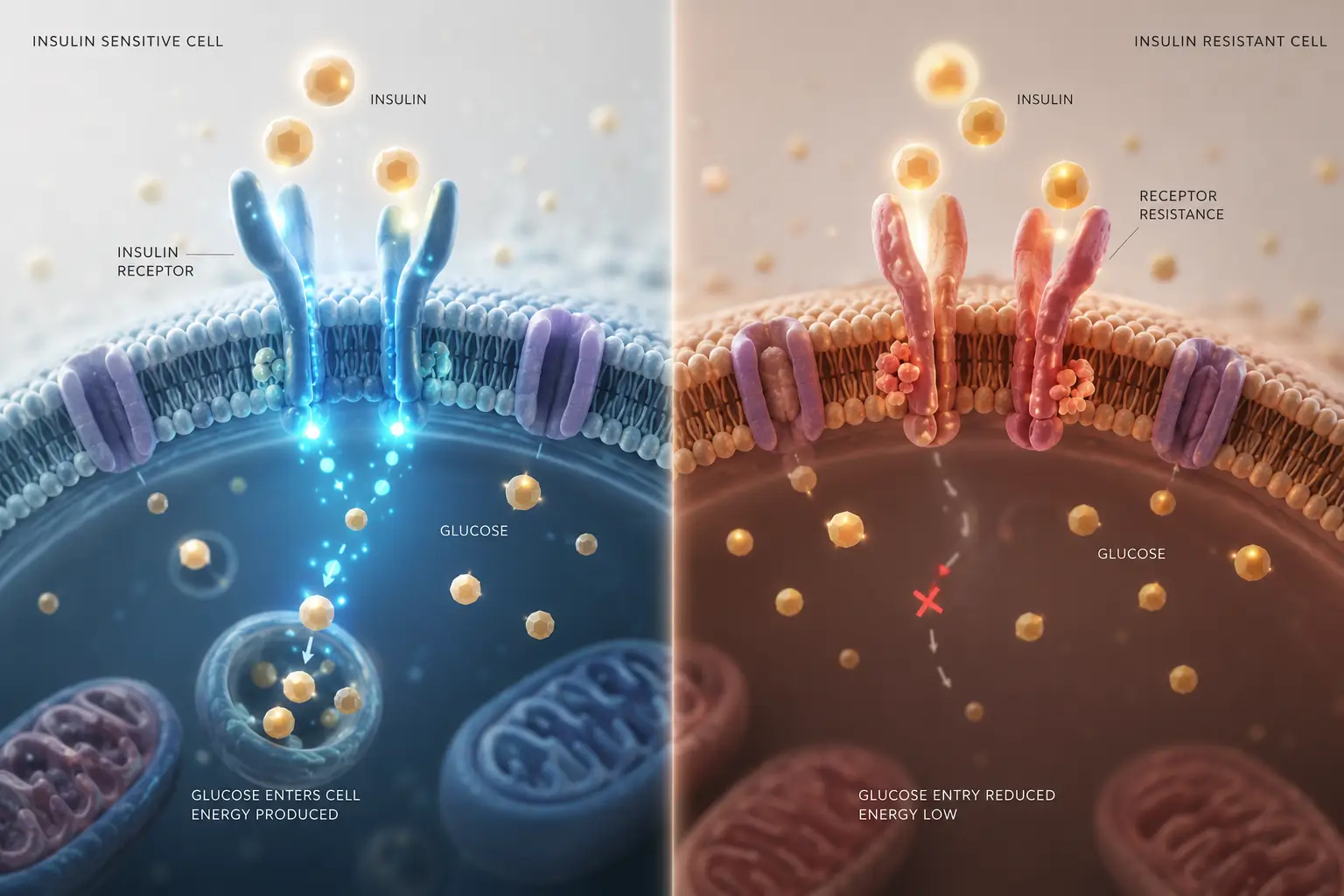
The liver is the body’s metabolic control room. It stores glucose and releases it between meals, makes and exports fat, and helps regulate cholesterol. When fat builds up inside liver cells, the liver becomes resistant to insulin: it keeps releasing glucose when it should stop, which is a major reason for high fasting blood sugar.
A fatty liver also exports more triglycerides into the blood. That is why fatty liver, high triglycerides, belly fat and rising blood sugar so often appear together.
In a minority of people, fatty liver progresses to inflammation and scarring (fibrosis), which is why it is worth taking seriously even when the early stages feel like nothing.
How it is usually found
Fatty liver is typically picked up in one of these ways:
- An abdominal ultrasound showing a “bright” or fatty liver.
- Raised liver enzymes (ALT, AST) on a routine blood test — though they can be normal.
- A FibroScan, which estimates both liver fat and stiffness, if your doctor wants more detail.
What reverses it
The most effective treatment is also the least exotic: weight loss, particularly from around the middle. Losing even 5–10% of body weight can substantially reduce liver fat in people who carry extra weight.
Cutting back on sugary drinks and refined carbohydrates (the liver turns excess sugar into fat), keeping alcohol low, moving every day and sleeping well all help. Because fatty liver is so closely tied to insulin resistance, anything that improves insulin sensitivity tends to help the liver too.
What the berberine trial measured
Berberine has been studied in fatty liver because of its effects on the liver’s fat and glucose production. In a randomised trial published in PLOS One in 2015, adults with fatty liver who took berberine alongside lifestyle changes saw a greater reduction in liver fat — measured with magnetic resonance spectroscopy — than those who made lifestyle changes alone, together with improvements in weight, blood sugar and lipids.
Mechanistically, berberine switches on AMPK in liver cells, which dampens the signals that drive new fat production and improves the liver’s response to insulin.
As always, the key phrase is “alongside lifestyle changes”. Berberine supported the effect of those changes; it did not replace them. And anyone with established liver disease should discuss any supplement with their doctor first.
A supplement for the liver should not burden the liver
Everything you swallow passes through your liver. That makes the cleanliness of a supplement matter more, not less, if liver health is the reason you are taking it. Berberine is extracted from a farmed root, and poorly controlled extracts can carry pesticide residues and heavy metals.
A lab report for the batch is the only way to know what is in the capsule. Before you buy any berberine, check these five things.
How it is typically taken
In the liver trial and most metabolic studies, berberine was taken with meals, around 500 mg two or three times a day. Take it with food to limit stomach upset, and review your ultrasound or liver enzymes with your doctor after a few months of combined changes.
The bottom line
Fatty liver is common, silent and tightly linked to blood sugar and belly fat. Found early, it responds well to weight loss, less sugar and alcohol, and more movement. Berberine has trial evidence for supporting liver-fat reduction alongside those changes — provided the product is clean and your doctor is in the loop.
Reader questions
Can berberine reverse fatty liver?
In a 2015 trial, berberine combined with lifestyle change reduced liver fat more than lifestyle change alone. Weight loss remains the most effective treatment.
Is berberine safe for the liver?
In clinical trials it has generally been well tolerated. If you have an established liver condition, speak to your doctor before taking any supplement.
Sources
- Younossi ZM et al. — Global epidemiology of nonalcoholic fatty liver disease: meta-analytic assessment of prevalence, incidence, and outcomes. Hepatology, 2016.
- Rinella ME et al. — A multisociety Delphi consensus statement on new fatty liver disease nomenclature. Journal of Hepatology, 2023.
- Yan HM et al. — Efficacy of berberine in patients with non-alcoholic fatty liver disease. PLOS One, 2015.
- Kim WS et al. — Berberine improves lipid dysregulation in obesity by controlling central and peripheral AMPK activity. American Journal of Physiology — Endocrinology and Metabolism, 2009.
More from the Journal
The Blood Test Most People Are Never Offered — and Why It Can Flag Trouble Years Before Your Sugar Rises

Eating Less but the Weight Won’t Move? Researchers Point to a Hormone Most Diets Ignore