Why a 2,000-Year-Old Plant Extract Became One of the Most Studied Compounds in Metabolic Health
More than 100 million Indians live with diabetes, and another 136 million with prediabetes. Researchers looking for help in those in-between years keep returning to berberine. Here is what they found — and what it means if you are thinking of trying it.
It usually starts with a number on a lab report. A fasting glucose of 108. An HbA1c of 5.9. A doctor who calls it “borderline” and tells you to watch your diet. Nothing hurts, so you do what most people do: you wait.
You would not be alone. When India’s national ICMR-INDIAB survey published its findings in 2023, it estimated that 101 million Indians were living with diabetes — and a further 136 million had prediabetes, the stage where blood sugar runs higher than it should but not yet high enough for a diagnosis.
Those in-between years are exactly where metabolic researchers have been looking hardest. And one compound keeps turning up in their work: berberine, a bright-yellow alkaloid found in the roots of plants such as Indian barberry (Berberis aristata) — the daruharidra of Ayurveda.
From folk remedy to randomised trials
Berberine has been used in Ayurvedic and traditional Chinese medicine for well over two thousand years, mostly for digestive complaints. What changed in the last two decades is not the molecule. It is that researchers finally had the tools to measure what it does inside human cells — and began testing it in properly controlled trials.
That body of work is now substantial. A 2015 meta-analysis in the Journal of Ethnopharmacology pooled 27 randomised controlled trials involving 2,569 patients with type 2 diabetes, high cholesterol or high blood pressure. Its authors concluded that berberine had a comparable effect to standard treatments in those conditions, without serious side effects in the trials they reviewed.
That is an unusual evidence base for a plant extract. Most supplements are sold on the strength of a single small study, a mouse experiment or nothing at all. Berberine has dozens of human trials behind it — which is precisely why it deserves a clear-eyed look rather than either hype or dismissal.
What changed in the last two decades is not the molecule.
What the landmark trials actually measured
One of the most cited studies was published in the Journal of Clinical Endocrinology & Metabolism in 2008. Researchers gave 116 adults with type 2 diabetes and raised cholesterol either 1 g of berberine a day or a placebo for three months. In the berberine group, average HbA1c fell from 7.5% to 6.6% and fasting glucose from 7.0 to 5.6 mmol/L, with falls in triglycerides and LDL cholesterol as well.
The same year, a trial in the journal Metabolism compared berberine directly with metformin in adults newly diagnosed with type 2 diabetes. After three months, the two groups showed statistically similar reductions in HbA1c, fasting glucose and post-meal glucose — and the berberine group also saw lower triglycerides and total cholesterol.
Those participants had diagnosed diabetes and were followed by doctors. The results show that berberine does something real and measurable. They do not show that it treats diabetes by itself, and they certainly do not show that it can replace a medicine you have been prescribed. That distinction matters, and we will come back to it.
The switch inside your cells
Most of berberine’s effects trace back to a single enzyme: AMP-activated protein kinase, or AMPK. Think of it as your cells’ fuel gauge. When energy runs low — during exercise, for example — AMPK switches on and tells your cells to pull glucose out of the blood, burn fat for fuel, and stop manufacturing new sugar and fat.
Berberine nudges that switch. A 2006 study in the journal Diabetes showed that berberine activates AMPK, and a 2008 study in the same journal showed how: it mildly slows one part of the cell’s power plant (mitochondrial complex I), so the cell reads its energy as low. Metformin, the world’s most widely prescribed diabetes medicine, is understood to act through a strikingly similar route.
- Your liver releases less glucose into the blood between meals and overnight.
- Your muscles take up more glucose after you eat.
- Your liver makes less new fat and cholesterol.
A second site of action: your gut
There is a twist. Berberine is poorly absorbed — only a small fraction of each dose reaches the bloodstream. Most of it stays in the digestive tract, where researchers have found it shifts the balance of gut bacteria towards species associated with better metabolic health.
That is part of why scientists now describe berberine as working on several fronts at once — liver, muscle and gut — which may explain why trials so often report improvements in several markers together rather than just one.
What it cannot do
Berberine is not a shortcut. Much of the evidence compares berberine plus changes to diet and activity against those same changes alone. The extract adds to the basics; it does not stand in for them.
It is also not fast. Most trials measured results over 8 to 12 weeks, not days. And it is not side-effect free: the most common complaints are digestive — cramping, loose stools or constipation — usually mild, usually in the first week or two, and reduced by taking it with food.
Finally, it is not a replacement for treatment. If you have been prescribed medicine for blood sugar, cholesterol or blood pressure, berberine is a conversation to have with your doctor, not a swap to make on your own.
If you try it, the bottle matters more than you think
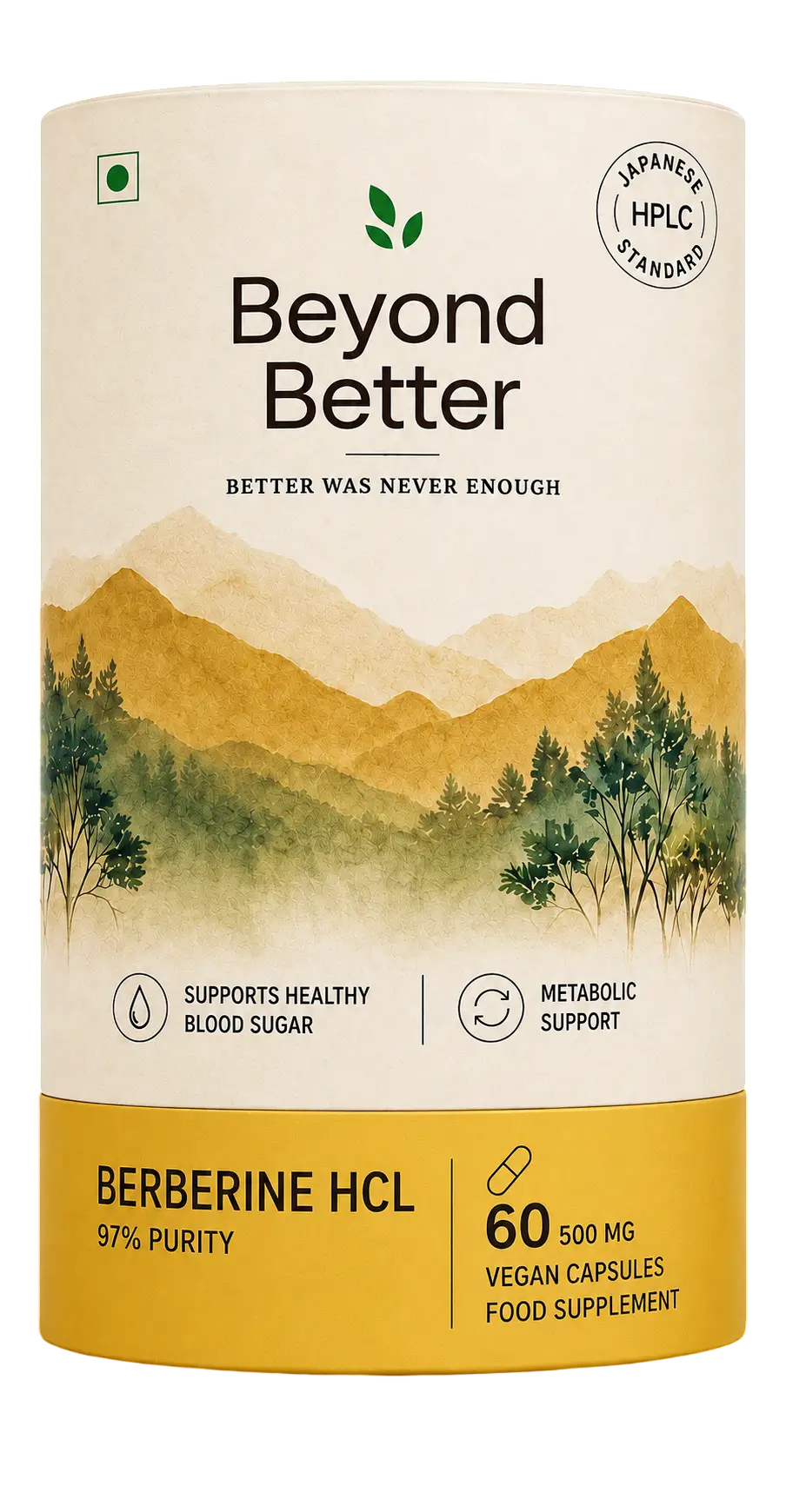
Here is the part of the berberine story that rarely makes it into social media reels. Every trial above used a defined dose — typically 900 to 1,500 mg of berberine a day, divided across meals. A supplement can only reproduce that if it genuinely contains what its label says.
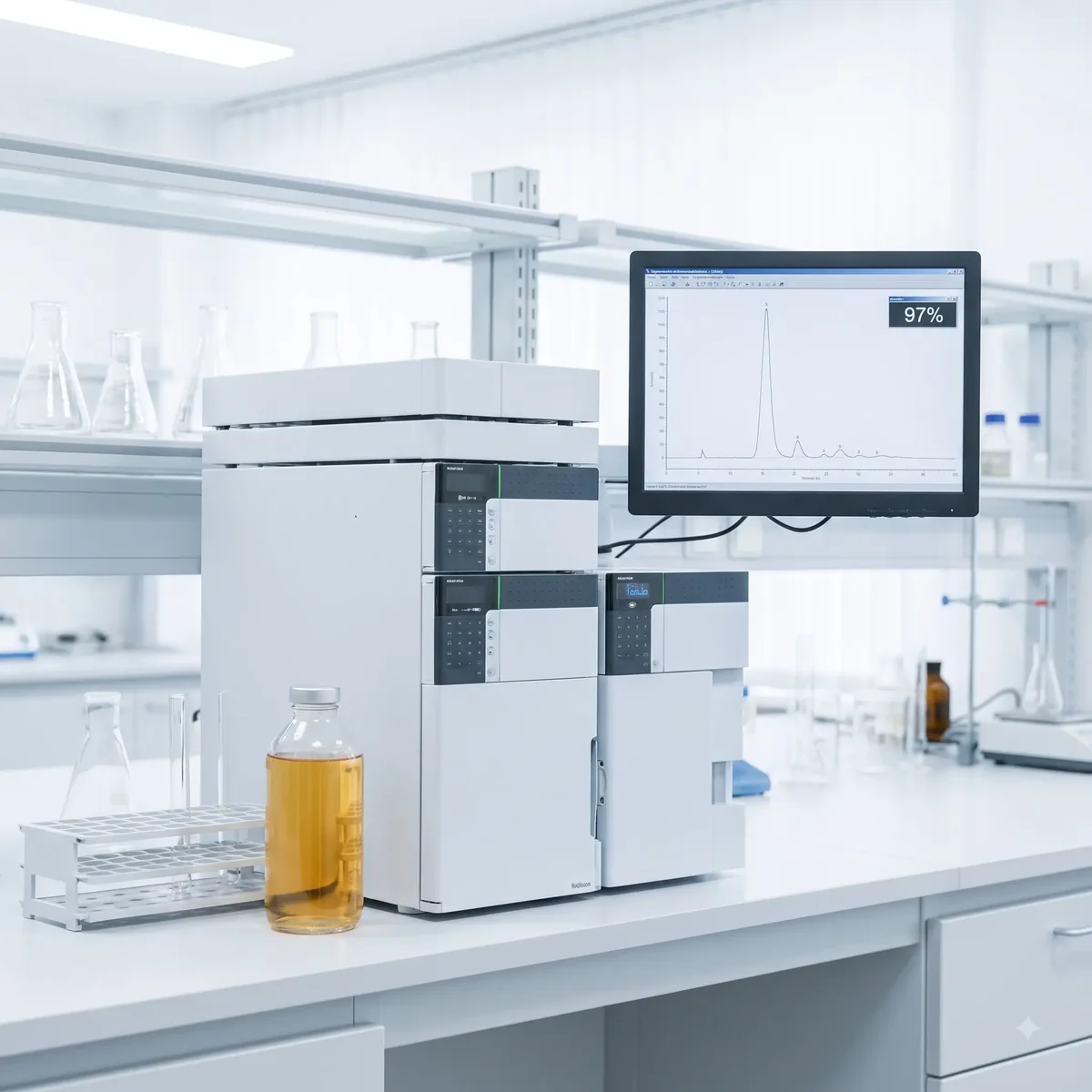
Berberine is a botanical extract, pulled from the roots of a farmed plant. The finished powder can vary — in how much berberine it really contains, and in what else came along from the field: pesticide residues, heavy metals, microbes. A label is a claim. Only a lab report for the batch shows the result.
So before you buy any berberine, from any brand, run through five quick checks.
How it is typically taken
In trials, berberine was usually taken two or three times a day with meals, for a daily total of 900 to 1,500 mg. Taking it with food reduces stomach upset and lines each dose up with the rise in blood sugar that follows eating. A common routine is 500 mg with breakfast and 500 mg with dinner.
Give it 8 to 12 weeks before judging. If you are tracking your numbers, ask your doctor to repeat your fasting glucose or HbA1c after three months so you are comparing like with like.
The bottom line
Berberine has earned its place in metabolic research the hard way — through trials, not testimonials. It is not a miracle and it is not a medicine. For adults in the grey zone of “borderline” numbers, it is one of the better-studied supplements to discuss with a doctor, alongside the unglamorous basics of food, movement and sleep.
If you decide to try it, choose one whose testing you can check for yourself.
Reader questions
Is berberine as effective as metformin?
In a head-to-head trial in adults newly diagnosed with type 2 diabetes, the two produced statistically similar improvements in blood sugar over three months. Metformin has decades more safety and outcome data, and berberine is not a substitute for any medicine you have been prescribed.
How long does berberine take to work?
Most clinical trials measured changes in fasting glucose, HbA1c and lipids over 8–12 weeks of consistent daily use.
Do I still need to change my diet?
Yes. The strongest evidence compares berberine plus lifestyle changes against lifestyle changes alone. It is a complement to better food, movement and sleep, not a replacement for them.
Who should not take berberine?
Pregnant or breastfeeding women and children should not take it. Anyone on medication — especially for diabetes, blood pressure or blood thinning — should speak to their doctor first.
Sources
- Anjana RM et al. — Metabolic non-communicable disease health report of India: the ICMR-INDIAB national cross-sectional study. Lancet Diabetes & Endocrinology, 2023.
- Lan J et al. — Meta-analysis of the effect and safety of berberine in the treatment of type 2 diabetes mellitus, hyperlipemia and hypertension. Journal of Ethnopharmacology, 2015.
- Zhang Y et al. — Treatment of type 2 diabetes and dyslipidemia with the natural plant alkaloid berberine. Journal of Clinical Endocrinology & Metabolism, 2008.
- Yin J et al. — Efficacy of berberine in patients with type 2 diabetes mellitus. Metabolism, 2008.
- Lee YS et al. — Berberine, a natural plant product, activates AMP-activated protein kinase with beneficial metabolic effects. Diabetes, 2006.
- Turner N et al. — Berberine and its more biologically available derivative, dihydroberberine, inhibit mitochondrial respiratory complex I. Diabetes, 2008.
- Habtemariam S — Berberine pharmacology and the gut microbiota: a hidden therapeutic link. Pharmacological Research, 2020.
More from the Journal
Berberine vs Metformin: What Happened When Researchers Tested Them Side by Side
Your Sugar Is ‘Borderline’. Here’s What the Research Says About the Years Before a Diagnosis