Is Berberine Really ‘Nature’s Ozempic’? We Checked the Viral Claim Against the Science
The nickname has spread across social media, often attached to before-and-after photos. The trials tell a more modest story — and a more useful one, if you want to know what berberine can realistically do for you.
Scroll long enough through health content and you will meet the claim: berberine, a cheap plant extract, is “nature’s Ozempic”. The videos are confident. The before-and-after photos are dramatic. The comments are full of people asking where to buy it.
It would be easy to let the nickname stand; it sells a great deal of berberine. But anyone who buys berberine expecting Ozempic-level results will be disappointed. Here is what the science actually says.
How Ozempic works
Ozempic is a brand name for semaglutide, a prescription medicine that mimics GLP-1, a gut hormone released after eating. GLP-1 tells the pancreas to release insulin when blood sugar rises, slows how quickly the stomach empties, and acts on appetite centres in the brain so you feel full sooner and for longer.
Semaglutide is engineered to do this powerfully and for days at a time. In the landmark STEP 1 trial, published in the New England Journal of Medicine in 2021, adults with overweight or obesity taking the weight-management dose lost an average of about 15% of their body weight over 68 weeks, compared with about 2.4% on placebo.
How berberine works
Berberine works mainly through a different pathway. It switches on AMPK, the cell’s energy sensor, by mildly slowing part of the mitochondria. That reduces the glucose your liver releases, helps muscles take up glucose, and slows the production of new fat and cholesterol.
There is one small overlap. Animal and cell studies, including a 2010 study in Biochemical Pharmacology, suggest berberine can increase the body’s own release of GLP-1 in the gut. But nudging your natural GLP-1 is a very different thing from an injected drug engineered to act like GLP-1 at high levels around the clock.
Nudging your natural GLP-1 is a very different thing from an injected drug.
What the evidence says about weight
Berberine’s trials show modest effects on weight and waist size over a few months, alongside clearer improvements in blood sugar, triglycerides and cholesterol. Those metabolic results are real and well replicated. The weight loss is not in the same league as semaglutide’s, and nothing in the research suggests it ever will be.
So why has the nickname stuck? Partly because both substances are discussed in the context of blood sugar and weight. Partly because a cheap “natural alternative” to an expensive, hard-to-get drug is an irresistible story. It is a good headline and a poor description.
- Semaglutide: a prescription GLP-1 medicine, weekly injection, about 15% average weight loss in STEP 1.
- Berberine: a plant extract taken with meals, acting mainly through AMPK, with modest weight effects.
- Both: improve blood sugar; both can cause digestive side effects.
What berberine is actually good for
Take away the Ozempic comparison and berberine still has one of the better evidence bases of any supplement. Meta-analyses of dozens of trials show improvements in fasting blood sugar, HbA1c and blood lipids, with comparable short-term effects on blood sugar to standard oral medicines in some head-to-head studies.
That makes it a sensible thing to discuss with your doctor if your blood sugar, triglycerides or waistline are heading the wrong way — as a support for diet, movement and sleep, not as a weight-loss injection in capsule form.
If you are on a GLP-1 medicine
Do not stop or replace a prescribed medicine with berberine. If you are taking semaglutide or any glucose-lowering drug and are curious about berberine, talk to your doctor first — both lower blood sugar, and combining glucose-lowering agents needs supervision.
Hype attracts bad products
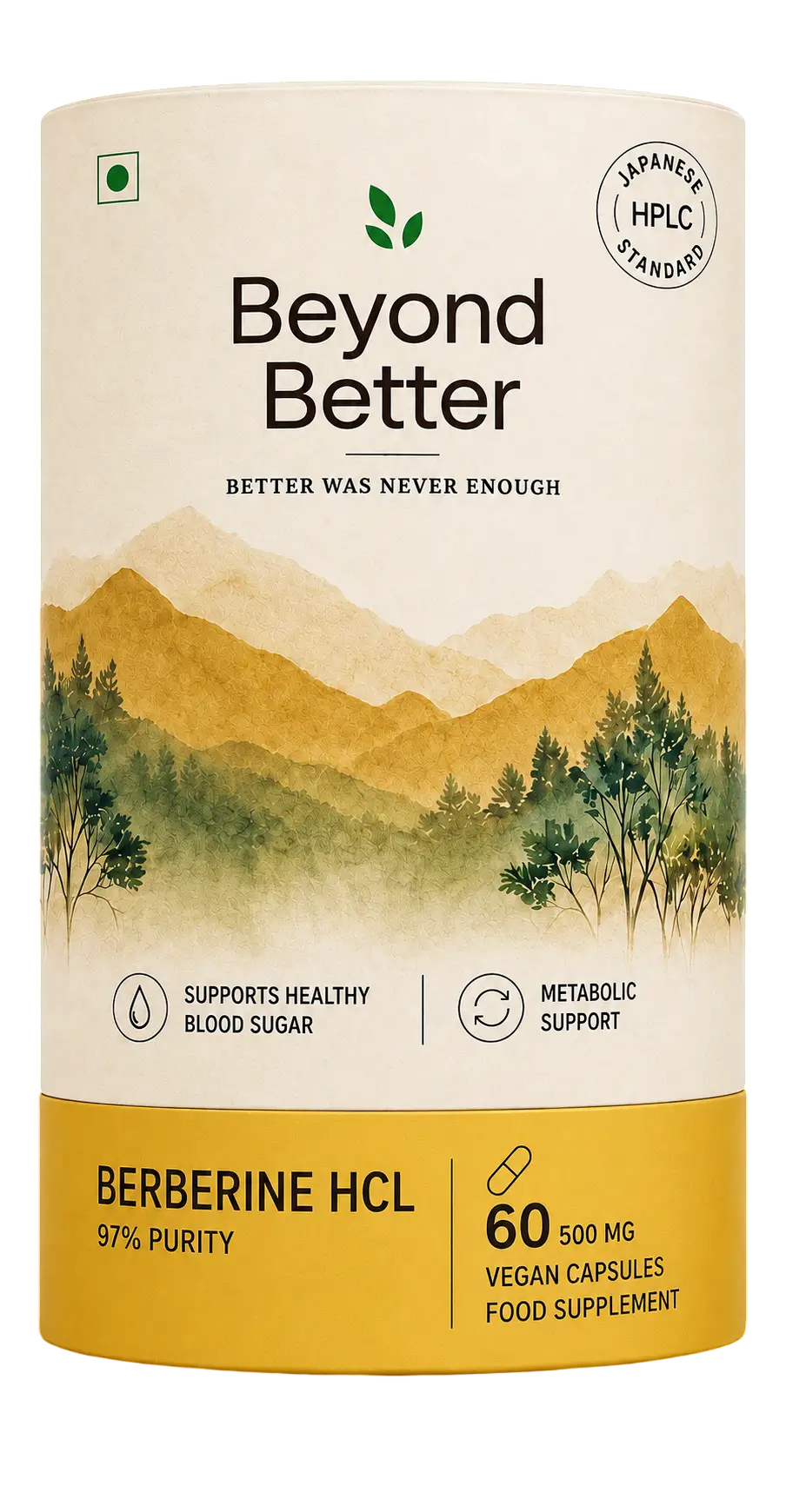
Every time a supplement goes viral, the market fills with cheap versions trading on the buzz. Berberine is no exception. Many products say little about how much active berberine hydrochloride each capsule contains, and almost none publish tests for the pesticide residues and heavy metals a plant extract can carry.
If the hype has made you curious, the best protection is to demand evidence. Here are five checks that separate a tested product from a trending one.
Realistic expectations
If you try berberine, take it with meals — commonly 500 mg with breakfast and 500 mg with dinner — and judge it after about 12 weeks on your blood markers and waist, not on the scale alone. Expect steadier blood sugar and better lipids, not a transformation.
The verdict
Berberine is not nature’s Ozempic. It works differently, it is far less powerful for weight, and it should never replace a prescribed medicine. What it is, is a well-researched plant compound that supports healthy blood sugar and lipids. That is a smaller promise than the viral posts make — and one the evidence can actually keep.
Reader questions
Is berberine the same as Ozempic?
No. Ozempic (semaglutide) is a prescription GLP-1 medicine. Berberine is a plant extract that works mainly through AMPK, a different pathway, with much smaller effects on weight.
Why is berberine called “nature’s Ozempic”?
Because both are discussed in connection with blood sugar and weight. The nickname compares them loosely; it is not supported by their mechanisms or the size of their effects.
Can I take berberine with Ozempic?
Only with your doctor’s agreement. Both lower blood sugar, and combining glucose-lowering agents needs medical supervision.
Sources
- Wilding JPH et al. — Once-weekly semaglutide in adults with overweight or obesity (STEP 1). New England Journal of Medicine, 2021.
- Yu Y et al. — Modulation of glucagon-like peptide-1 release by berberine: in vivo and in vitro studies. Biochemical Pharmacology, 2010.
- Lan J et al. — Meta-analysis of the effect and safety of berberine in the treatment of type 2 diabetes mellitus, hyperlipemia and hypertension. Journal of Ethnopharmacology, 2015.
- Yin J et al. — Efficacy of berberine in patients with type 2 diabetes mellitus. Metabolism, 2008.
More from the Journal

Eating Less but the Weight Won’t Move? Researchers Point to a Hormone Most Diets Ignore
Berberine vs Metformin: What Happened When Researchers Tested Them Side by Side