‘Lab Tested’ Means Less Than You Think. Three Questions That Reveal Whether a Supplement Was Really Tested
Almost every supplement claims to be tested. Far fewer say who tested it, which batch, or for what. The difference between a meaningful claim and a decorative one comes down to details anyone can check in a minute.
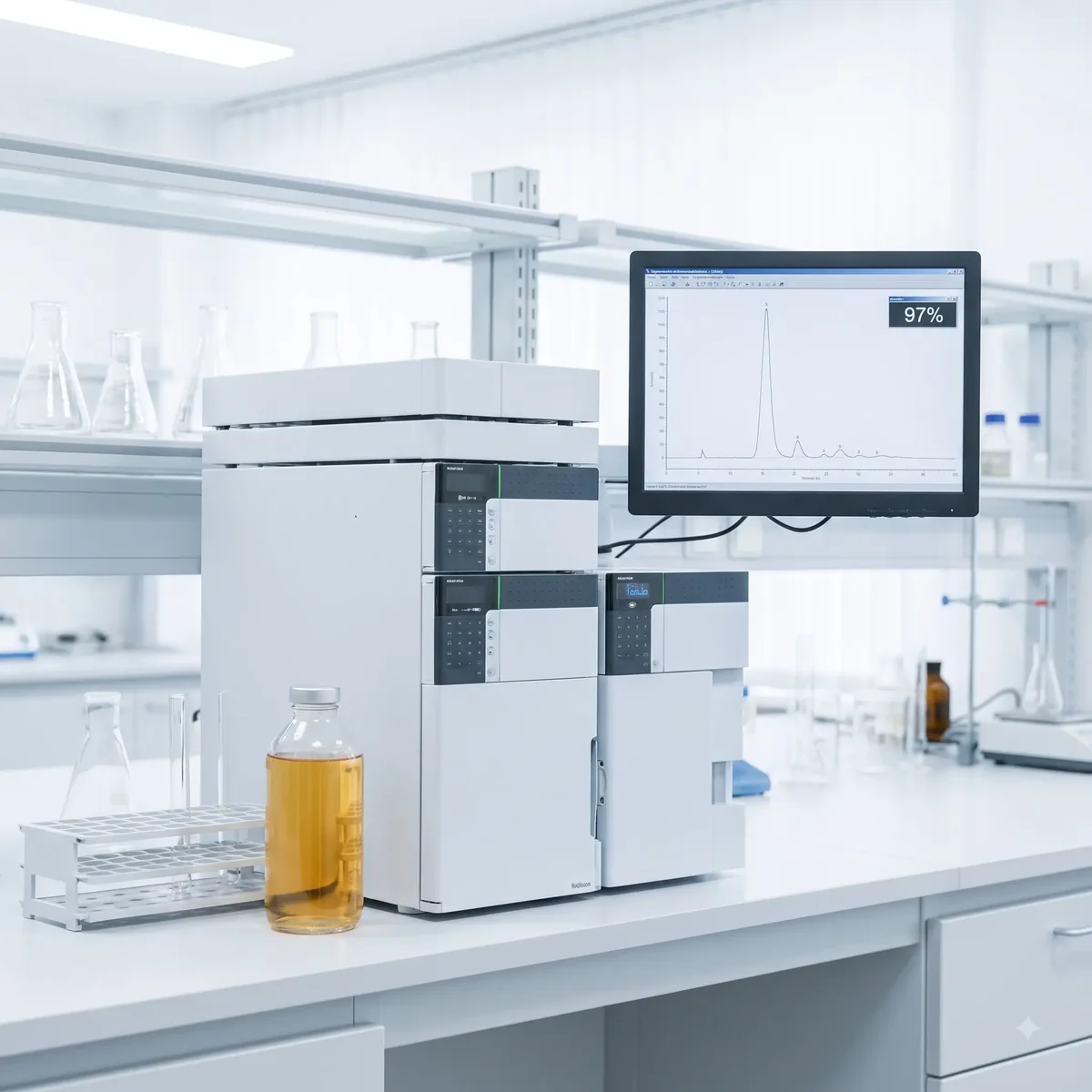
“Lab tested.” “Quality assured.” “Tested for purity.” You will find some version of these phrases on almost every supplement bottle. None of them is a regulated term, and on their own, none of them tells you much.
A product can accurately be described as tested if the company that makes it ran a check in its own facility. It can also be described as tested if an independent, accredited laboratory analysed a specific batch against published methods. Both are true statements. They are not remotely equivalent.
Who ran the test changes what it proves
In-house testing is a normal, necessary part of manufacturing. But when the party that profits from a result is also the party producing it, the result carries less weight for an outsider.
Independent, third-party testing separates those roles. The laboratory has no stake in whether the product passes, which is precisely what makes its result meaningful to you.
Both are true statements. They are not remotely equivalent.
What accreditation adds
Independence is not the whole story; competence matters too. The international standard for testing laboratories is ISO/IEC 17025. In India, laboratories are accredited against it by the National Accreditation Board for Testing and Calibration Laboratories (NABL), which assesses their methods, equipment calibration, staff competence and quality systems, and reassesses them periodically.
Reports issued under NABL accreditation typically carry the NABL symbol and a unique report number (a ULR). That is a quick, practical way to tell an accredited result from an informal one.
Batch-specific versus “representative”
The second question is what was tested. A specification sheet describes what a product is supposed to contain. A batch-specific report describes what one identified production run actually contained, tied to a batch number you can match to your bottle.
It is worth knowing a nuance here. Most supplement testing, including third-party testing, is performed on a sample the brand sends to the laboratory, and reports usually say so — for example, “not sampled by the laboratory”. The results then apply to that sample. That is exactly why the batch number matters: it is what connects the sample on the report to the product in your hand.
The three questions
Faced with any “tested” claim, ask:
- Who tested it? A named, independent laboratory — ideally accredited, with the NABL mark or equivalent on the report.
- Which batch? A batch or lot number on the report that matches what you are buying.
- For what, and with what result? Named tests, the methods used, and actual results against limits — not just the word “passed”.
What the answers look like in practice
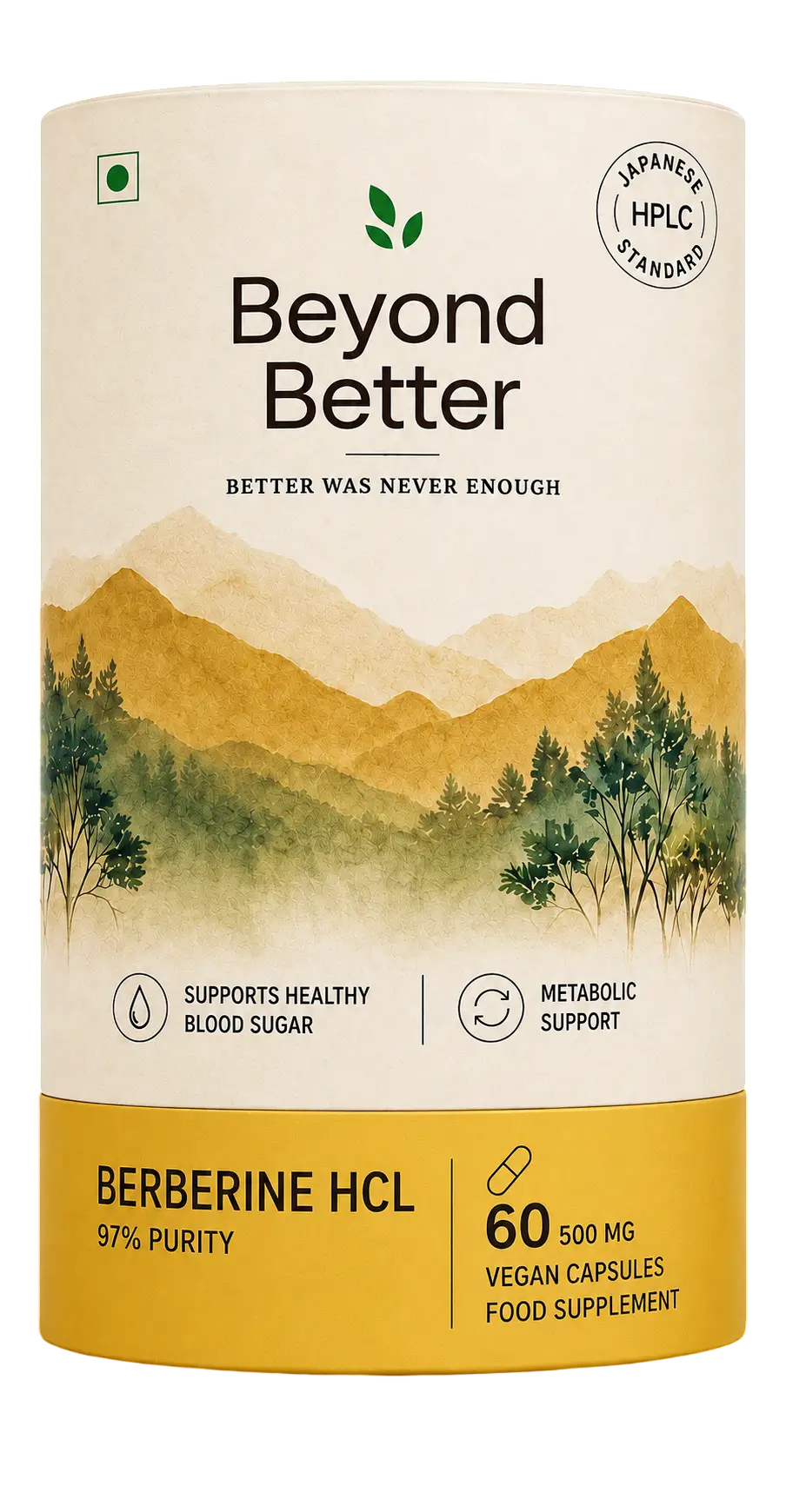
Beyond Better’s published reports are one example. They are issued by Eureka Analytical Services for batch CIFOW-11. The pesticide, heavy-metal and microbiology reports carry the NABL mark and a ULR number; each report names the sample, the batch, the methods, the results and the signing analyst; and every page is published, not summarised.
Like most supplement reports, they note that the samples were supplied by the brand rather than collected by the laboratory. We think readers should know that, and it is the reason the batch number is printed on every report.
Tested should mean you can check
The test of a testing claim is simple: can you read the evidence before you pay? If the answer is a summary graphic, a certificate “available on request” or nothing at all, the claim is decorative.
Here are the five checks worth running on any berberine, including the one featured here.
Manufacturer testing still matters
None of this makes in-house quality control worthless. Good manufacturers test raw materials and finished products throughout production, and GMP rules — such as 21 CFR Part 111 in the United States and FSSAI’s regulations in India — set expectations for it. Those rules govern the process; they do not require any result to be shown to customers. Publishing is a choice.
The bottom line
“Tested” is a word. A named, accredited laboratory, a matching batch number and real results are evidence. Three questions — who, which batch, and what result — are enough to tell them apart in under a minute.
Reader questions
What does third-party tested actually mean?
That an independent laboratory with no commercial stake in the result performed the analysis, rather than the company selling the product.
What is NABL accreditation?
NABL is India’s accreditation board for testing laboratories. Accreditation means the lab has been independently assessed against ISO/IEC 17025 for its methods, equipment and competence.
What does “not sampled by the laboratory” mean on a report?
That the brand supplied the sample. The results apply to that sample, which is why the batch number on the report should match your product.
Is manufacturer testing worthless?
No. It is a normal part of quality control. It simply cannot replace independent verification, because the same party produces both the product and the result.
Sources
- ISO/IEC 17025:2017 — General requirements for the competence of testing and calibration laboratories. International Organization for Standardization, 2017.
- National Accreditation Board for Testing and Calibration Laboratories (NABL) — accreditation programme. Quality Council of India, 2024.
- 21 CFR Part 111 — Current good manufacturing practice for dietary supplements. US Food and Drug Administration, 2007.
- ICH Q2(R1) — Validation of analytical procedures: text and methodology. International Council for Harmonisation, 2005.
More from the Journal
The ‘500 mg’ on Your Supplement Label Might Not Mean What You Think
A Plant Extract Can Be 99% Pure and Still Carry Pesticide Residue. Here’s the Test That Catches It