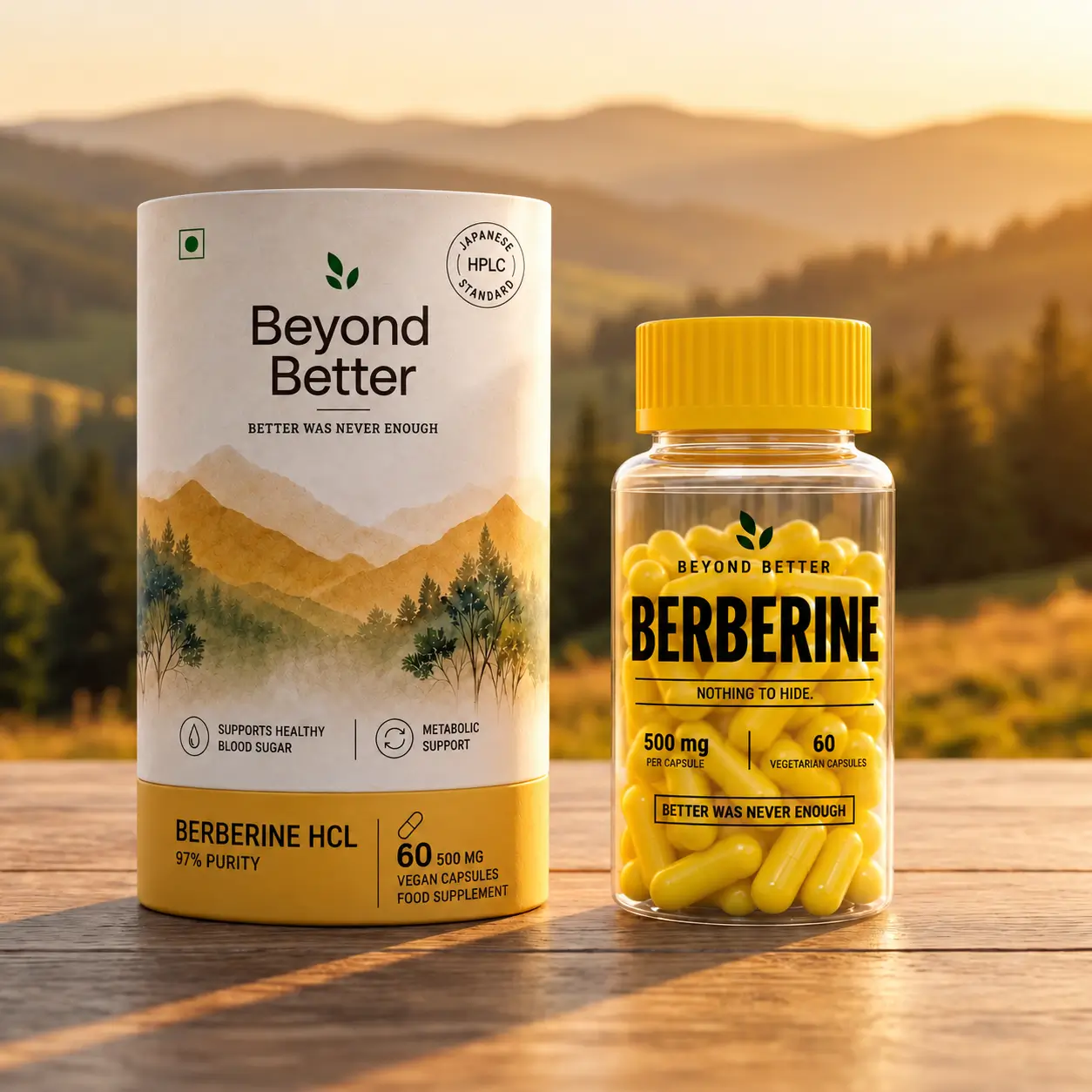
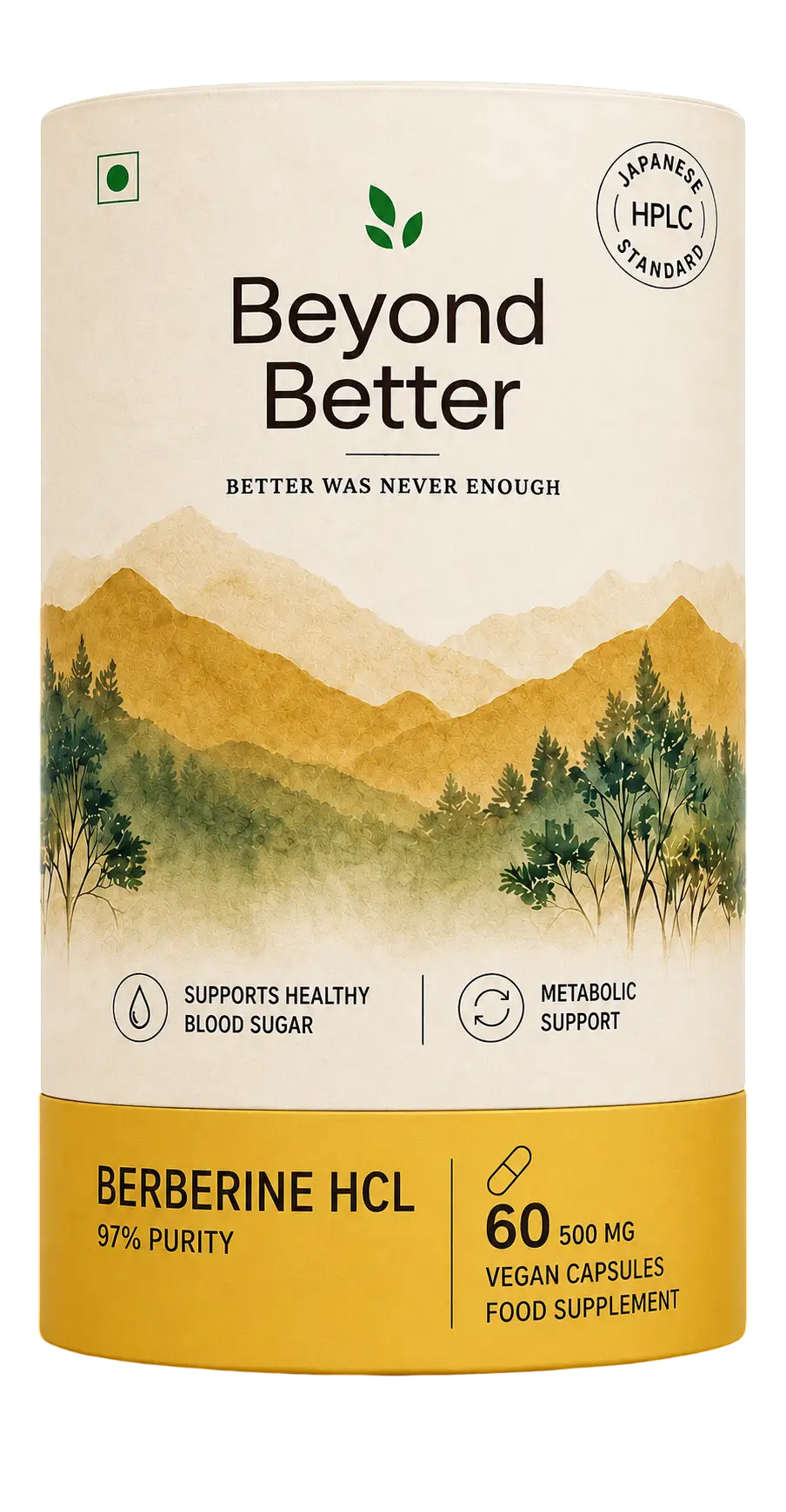
What Is Berberine? Benefits, Dosage, Side Effects and How to Choose One
A plain-language guide to the yellow plant compound that has become one of the most researched supplements for blood sugar and cholesterol: where it comes from, what the trials found, how people take it, and who should not.
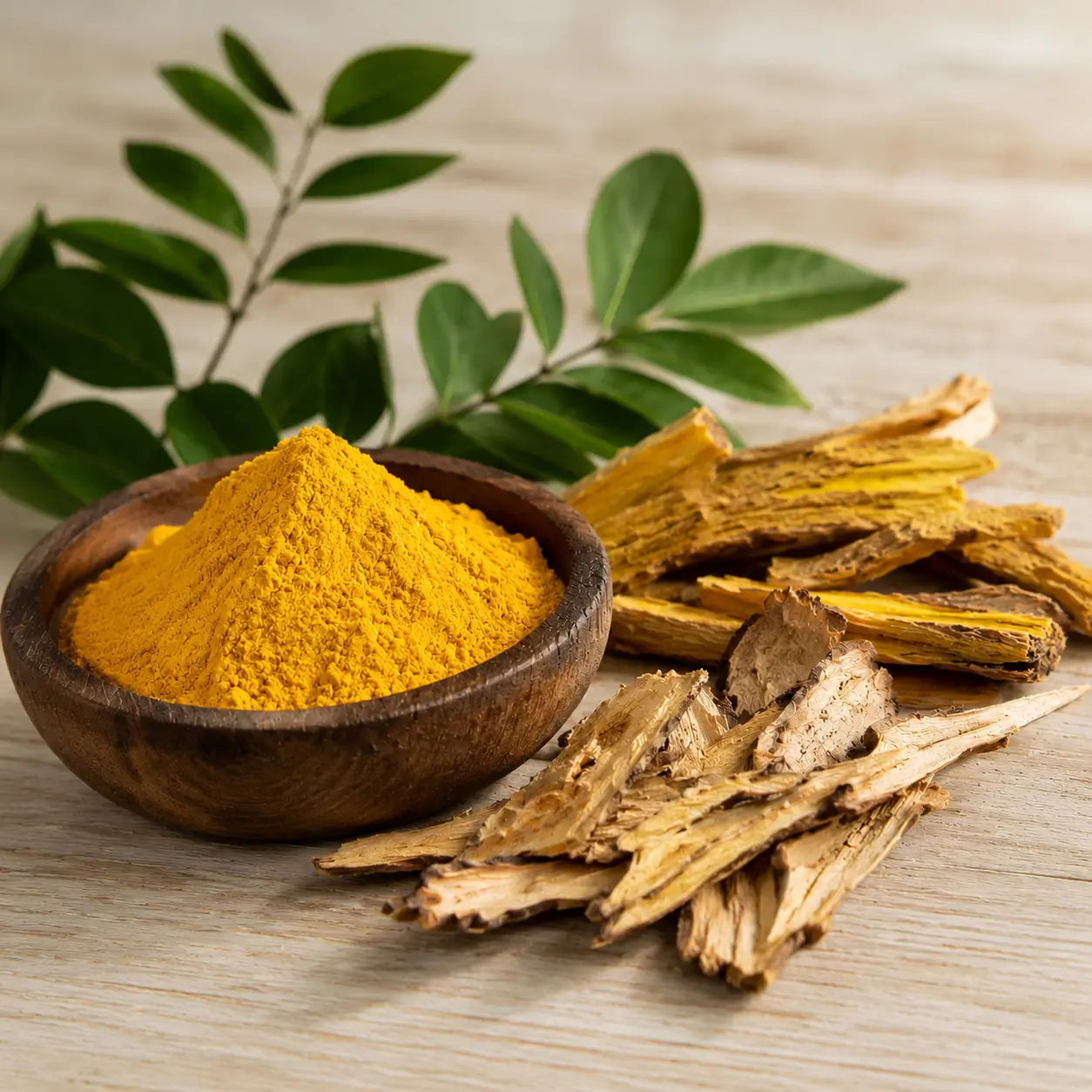
Berberine is a bright yellow compound found in the roots and bark of a handful of plants, including one that grows in the Himalayas. It has been part of Ayurvedic and traditional Chinese medicine for more than two thousand years. In the last twenty, it has become one of the most studied natural compounds for blood sugar and cholesterol.
This guide brings together what that research found, in one place, with links to the deeper articles in this library for each topic.
What berberine is, and where it comes from
Berberine is an alkaloid, a type of plant compound, and the reason the roots of these plants are yellow. The best-known Indian source is Berberis aristata, called Indian barberry in English, daruharidra in Ayurveda and daru haldi in Hindi. Other sources include Chinese goldthread (Coptis chinensis) and European barberry (Berberis vulgaris).
Traditional use was mostly for digestive complaints. Modern interest grew through the 2000s, as trials tested it on blood sugar and cholesterol and researchers found it acts on the same energy switch inside cells as metformin, the most prescribed diabetes medicine.
Supplements usually contain berberine hydrochloride (berberine HCl), a stable salt form of the compound. What matters on a label is how much berberine each capsule contains, which is not always the same as the weight of extract in it.
How it works
Inside cells, berberine mildly slows part of the mitochondria, the cell's power plant. The cell reads that as an energy shortage and switches on AMPK, its main energy sensor. Studies published in the journal Diabetes in 2006 and 2008 described this mechanism.
Once AMPK is on, the liver releases less glucose, muscles take up more of it, and the body makes less new fat and cholesterol. Separately, berberine increases the number of LDL receptors on liver cells, which pull LDL (“bad”) cholesterol out of the blood. That route, described in Nature Medicine in 2004, is different from the one statins use.
Berberine is also poorly absorbed. Much of each dose stays in the gut, where it changes the balance of gut bacteria, which researchers think is part of how it works and part of why it can upset the stomach at first.
What the research shows
Blood sugar has the strongest evidence. In a 2008 trial in the journal Metabolism, three months of berberine lowered HbA1c and fasting glucose about as much as metformin in adults newly diagnosed with type 2 diabetes. A 2012 review of 14 randomised trials with 1,068 people, and a 2022 review of 37 trials with 3,048 people, reached broadly the same conclusion.
Cholesterol and triglycerides come next. In the 2004 Nature Medicine study, three months of berberine lowered total cholesterol by 29%, triglycerides by 35% and LDL cholesterol by 25% in 32 people with high cholesterol. A 2013 review of 11 randomised trials with 874 people found reductions in total cholesterol, LDL and triglycerides, with a small rise in HDL.
Other areas, such as PCOS, fatty liver and weight, have promising but smaller and earlier evidence. Each has its own article in this library.
- Most trials were small, lasted three to six months, and were run in China.
- They measured blood markers, not long-term outcomes such as heart attacks.
- Berberine is a supplement, not a replacement for any prescribed medicine.
How people take it
Trials typically used 1,000 to 1,500 mg a day, split into two or three doses of 500 mg taken with meals. Splitting the dose and taking it with food also makes stomach upset less likely.
Many people start with one 500 mg capsule a day for the first week, then take one with breakfast and one with dinner. Trials measured results after about three months, so that is a sensible point to recheck your blood tests.
Side effects, and who should not take it
The most common side effects are digestive: nausea, cramps, loose stools or constipation, usually mild and in the first week or two. A 2022 review of 37 trials found no significant increase in overall side effects or low blood sugar compared with control groups.
Berberine can lower blood sugar and blood pressure, and it changes how the liver processes some medicines. That makes a conversation with your doctor essential if any of these apply to you:
- You are pregnant or breastfeeding, or it is for a child.
- You take medicine for diabetes, blood pressure or blood thinning.
- You take any regular prescription medicine.
- You have liver or kidney disease.
Why the product matters as much as the plant
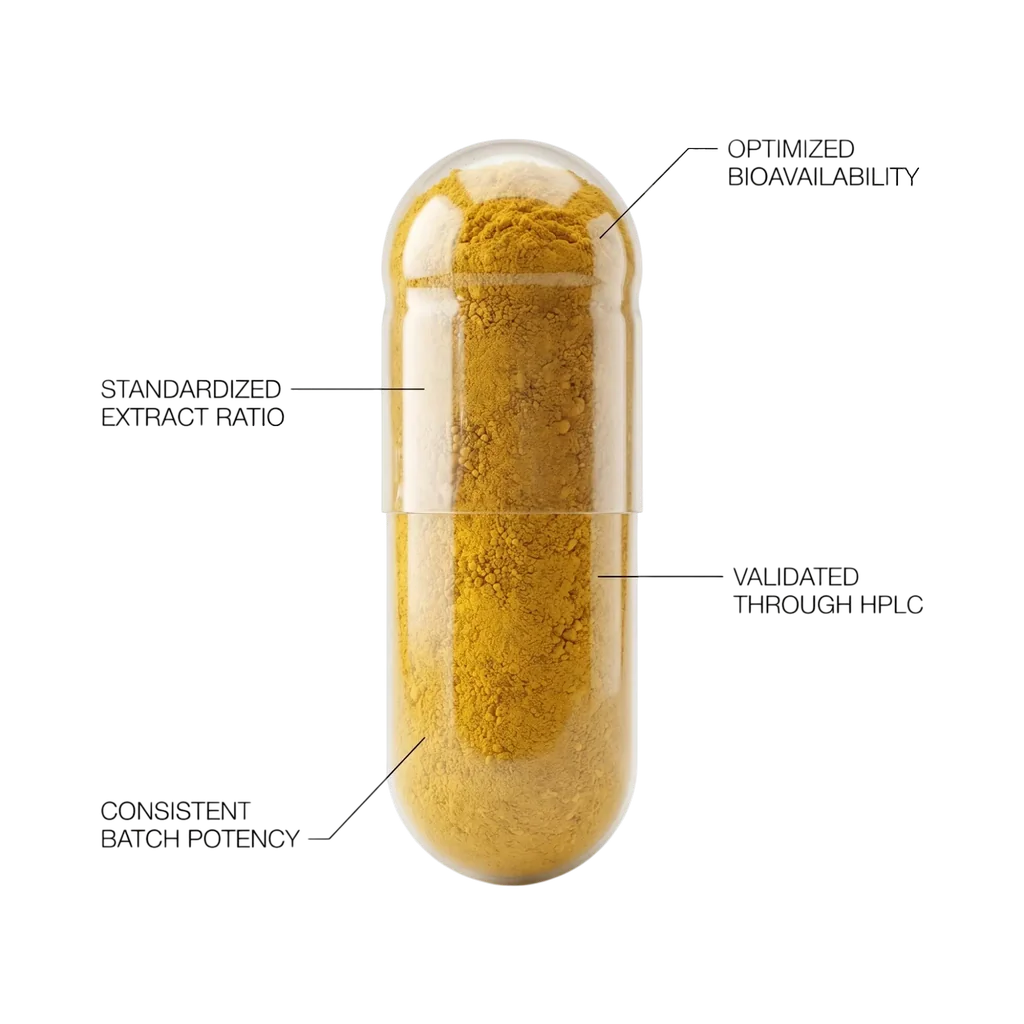
The trials used defined, tested berberine. A supplement is only as reliable as its testing: the label can say 500 mg without saying how much of that is berberine, and an extract from a farmed root can carry pesticide residues or heavy metals that no label shows.
So before choosing any berberine, check for these five things.
Where to go next
For the evidence on a specific topic, start with the articles below: blood sugar, cholesterol, how to take it, side effects, and how to compare prices. If you take any medicine, take this guide to your doctor before you start.
The short answer
Berberine is a plant compound with real clinical evidence for blood sugar and cholesterol, from short trials. It is well tolerated by most people but not by everyone, and it interacts with some medicines. If you try it, take a tested product at the doses used in trials, with meals, and recheck your numbers after three months.
Reader questions
What is berberine called in Hindi?
Berberine itself has no common Hindi name, but its main Indian source, Berberis aristata, is called daru haldi in Hindi and daruharidra in Ayurveda.
What is berberine used for?
In modern research, mainly for blood sugar and cholesterol. Clinical trials found it lowered HbA1c, fasting glucose, LDL cholesterol and triglycerides over about three months.
Is berberine safe to take every day?
In trials lasting three to six months it was well tolerated, with mostly mild digestive side effects. It is not suitable in pregnancy, breastfeeding or for children, and anyone on regular medicine should check with their doctor first.
Is berberine the same as metformin?
No. They are different molecules that act on the same cellular switch. Metformin is a prescription medicine with decades of outcome data; berberine is a supplement with short-term trial data.
Sources
- Yin J et al. — Efficacy of berberine in patients with type 2 diabetes mellitus. Metabolism, 2008.
- Dong H et al. — Berberine in the treatment of type 2 diabetes mellitus: a systemic review and meta-analysis. Evidence-Based Complementary and Alternative Medicine, 2012.
- Xie W et al. — Glucose-lowering effect of berberine on type 2 diabetes: a systematic review and meta-analysis. Frontiers in Pharmacology, 2022.
- Kong W et al. — Berberine is a novel cholesterol-lowering drug working through a unique mechanism distinct from statins. Nature Medicine, 2004.
- Dong H, Zhao Y, Zhao L, Lu F — The effects of berberine on blood lipids: a systemic review and meta-analysis of randomized controlled trials. Planta Medica, 2013.
- Lee YS et al. — Berberine, a natural plant product, activates AMP-activated protein kinase with beneficial metabolic effects. Diabetes, 2006.
- Turner N et al. — Berberine and its more biologically available derivative, dihydroberberine, inhibit mitochondrial respiratory complex I. Diabetes, 2008.
- Habtemariam S — Berberine pharmacology and the gut microbiota: a hidden therapeutic link. Pharmacological Research, 2020.
- Guo Y et al. — Repeated administration of berberine inhibits cytochromes P450 in humans. European Journal of Clinical Pharmacology, 2012.
More from the Journal
How to Take Berberine: Dose, Timing and How Long Before It Works
Berberine for Cholesterol: What the Trials Found, and Where It Fits Next to Statins
Your Sugar Is ‘Borderline’. Here’s What the Research Says About the Years Before a Diagnosis
Berberine Side Effects: The Honest Answer Most Brands Leave Out
Berberine vs Metformin: What Happened When Researchers Tested Them Side by Side